
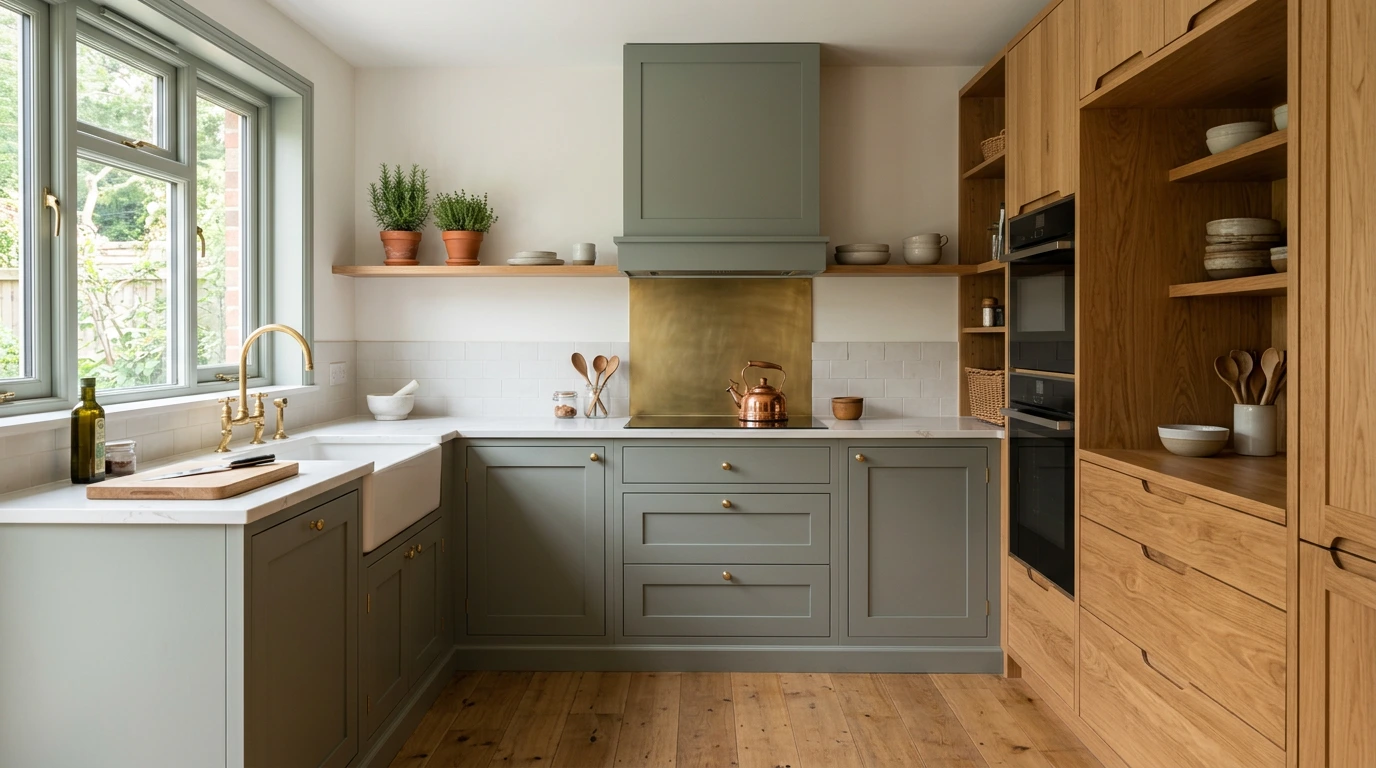
MDF vs Solid Wood Kitchen Doors
24 June 2026 · Ally
When you're choosing new kitchen doors, one question comes up again and again: what should they be made of? Two of the most talked-about options are MDF and solid wood, and the MDF vs solid wood kitchen doors decision is worth understanding, because each brings something different. Let's look at how these wood cabinet materials compare, so you can choose the one that suits your home, your style and your budget.
What is MDF?
MDF, or medium-density fibreboard, is made by compressing fine wood fibres into a smooth, dense, stable board. It's the foundation of a huge proportion of modern kitchen doors, usually finished with paint, a vinyl wrap or a foil surface.
Its great strengths are stability and value. Because it has no natural grain to expand and contract, MDF resists the warping that real wood can be prone to in a warm, steamy kitchen. It takes paint beautifully for a flawless, uniform finish, and it costs less than solid timber, which makes it a popular, sensible choice for many homes.
What is solid wood?
Solid wood doors are made from natural timber, such as oak, ash or pine. Each door carries its own unique grain and character, and there's a warmth and authenticity to real wood that many people love. It's often the choice for traditional and premium kitchens, where craftsmanship and natural beauty are part of the appeal.
The trade-offs are cost and care. Solid wood sits at the more expensive end, and because it's a natural material, it can move a little with changes in humidity and temperature, so it appreciates a stable environment and a little more attention over the years.
Comparing the two
Look. Solid wood offers genuine natural grain and character. MDF has an even core, but achieving a flawless painted finish takes proper preparation - a bare MDF door is sanded and primed to remove its natural texture before painting, or it can be finished with a paintable vinyl wrap. Done well, the result is a clean, even surface that's ideal for painted and contemporary looks.
Stability. MDF is highly stable and resists warping. Solid wood is beautiful but can move slightly with humidity.
Cost. MDF is the more budget-friendly option. Solid wood is a premium choice with a price to match.
Care. MDF is low-maintenance and easy to clean. Solid wood rewards a little more ongoing care to keep it at its best.
Best suited to. Solid wood is most commonly used for Shaker and slab styles, where its natural timber really shows, and suits traditional, characterful and premium kitchens. MDF is the more versatile of the two and it can be routed into almost any profile or design you like, from simple shapes to more detailed doors, and it takes paint beautifully whether primed as a bare door or finished as a paintable vinyl door. It's a flexible choice for painted styles, modern kitchens, and anyone wanting quality on a sensible budget.
Which is right for you?
Neither material is better than the other, they serve different priorities. If you want a flawless painted finish, excellent stability and great value, MDF is hard to beat. If you long for the warmth, grain and authenticity of natural timber and you're happy to invest a little more, solid wood is a joy. Both make beautiful kitchens, and the right answer is the one that fits your taste and budget.
To see how these materials relate to the finishes they create, our guide to kitchen door finishes brings the whole picture together.
Not sure which direction is right for you? Answer a few quick questions and we'll point you to the right place.