
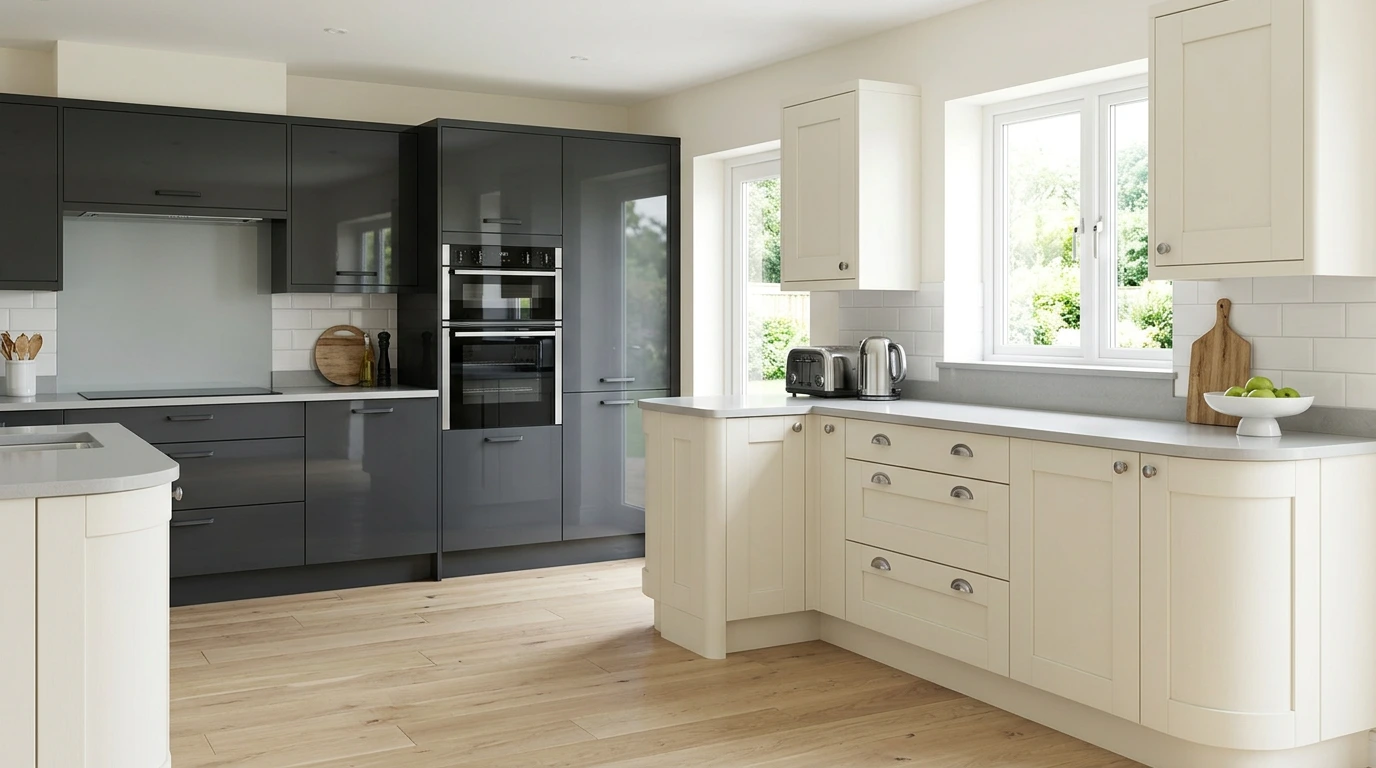
Acrylic vs Vinyl Wrapped Kitchen Doors
18 June 2026 · Ally
If you love a smooth, colourful, contemporary finish, two materials are likely to land on your shortlist: acrylic and vinyl wrapped. Both create gorgeous kitchens, and both are popular for good reason, but they have different strengths. Understanding the acrylic vs vinyl kitchen doors question helps you choose the one that fits your look, your budget and your home.
Here's how they compare.
What acrylic doors are
Acrylic doors have a high-shine acrylic surface bonded to a board core, creating a deep, glass-like gloss that's hard to beat for sheer impact. The reflectiveness is rich and almost mirror-like, which gives a kitchen a sleek, premium, modern feel. If a showstopping high-gloss look is what you're after, acrylic delivers it beautifully. There are matt acrylic options too, but it's the gloss that tends to turn heads.
What vinyl wrapped doors are
Vinyl wrapped cabinet doors are made by wrapping a vinyl film over a shaped MDF core. Their great strength is versatility. Because the wrap moulds to the shape beneath it, vinyl can be used on almost any profile, from a flat slab to a detailed Shaker, and in almost any finish, including matt, gloss and woodgrain. It also tends to be the more budget-friendly of the two, which makes it a hugely popular choice across all kinds of homes.
Comparing the two
The look. Acrylic offers the deepest, most reflective gloss available. Vinyl offers an enormous range of looks and finishes, so it's the more flexible if you want anything other than a flat high-gloss front.
Shape and style. Vinyl wraps neatly around moulded profiles, which is why Shaker and detailed doors are possible in vinyl. Acrylic is only suited to clean, flat slab fronts. Acrylic is also water resistant making it an excellent choice for bathroom cabinets, too.
Budget. Vinyl is generally the more affordable option, while acrylic sits at the more premium end. Both represent good value for what they offer.
Care and durability. Both wipe clean easily and stand up well to family life. Acrylic resists scratching nicely and keeps its shine, while vinyl is robust and practical, though it's worth keeping wrapped edges away from direct, prolonged heat, such as right beside an oven, to help them last.
How to choose
Start with the look you're picturing. If it's a deep, flawless gloss on simple slab doors, acrylic is calling. If you want a particular door profile, a matt or woodgrain finish, or a friendlier price, vinyl gives you that freedom. Then weigh your budget and how your kitchen is used day to day. Picturing the doors against your worktops and walls, and imagining how they will feel under everyday use, often brings the choice into focus.
Neither is better than the other. They're suited to different priorities, and both can be exactly right for the people who choose them. To see how these materials relate to the finishes they create, our guide to kitchen door finishes brings the whole picture together.
Not sure which direction is right for you? Answer a few quick questions and we'll point you to the right place.