
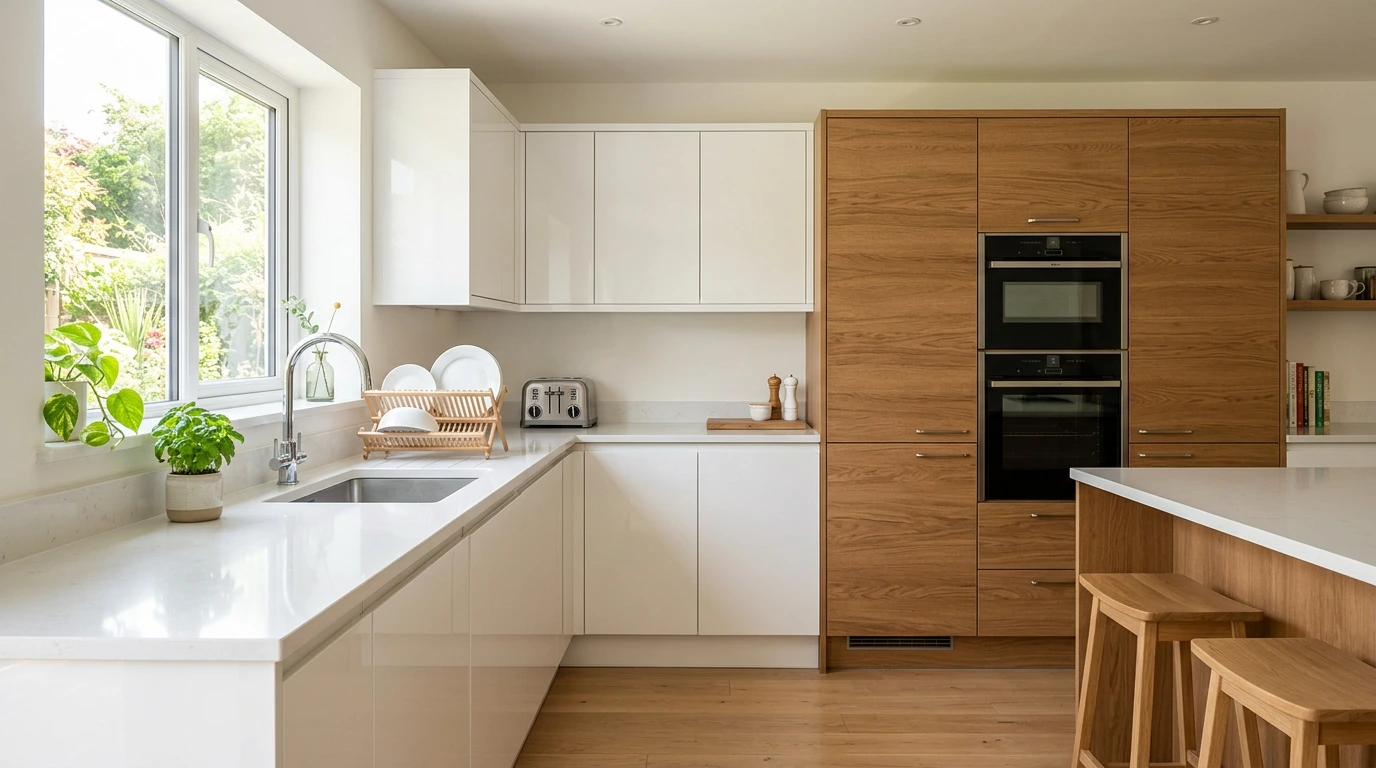
Kitchen Door Finishes Explained: Gloss, Matt, Woodgrain & More
16 June 2026 · Ally
You've found a door style you love. The shape feels right, the look suits your home, and you can picture it in the room. Then comes the next question, and it's a bigger one than most people expect: what finish?
It matters more than it sounds. The finish is the part of your kitchen you actually touch every day. It's what catches the morning light, what your hand brushes as you pass, and what you wipe down after dinner. Two kitchens with the exact same door style can feel completely different depending on the finish, so this is a lovely, important choice to get right.
This guide walks through the main kitchen door finishes in plain language, along with the materials underneath them, so you can find the combination that fits your home, your light and your life. As always, there's no single right answer here, only the one that's right for you.
Finish and material: two parts of the same door
Before we look at options, it helps to separate two things that often get muddled.
The finish is the surface you see and feel: glossy or matt, smooth or textured, plain colour or woodgrain. It sets the mood of the room.
The material is what the door is made from underneath that surface: vinyl-wrapped board, acrylic, painted timber, solid wood, and so on. It largely decides how the door wears over time and how it's cared for.
Most of the time you'll choose a look first and a material second, but knowing both exist helps everything that follows make sense. Let's start with the part you can see.
Gloss finishes
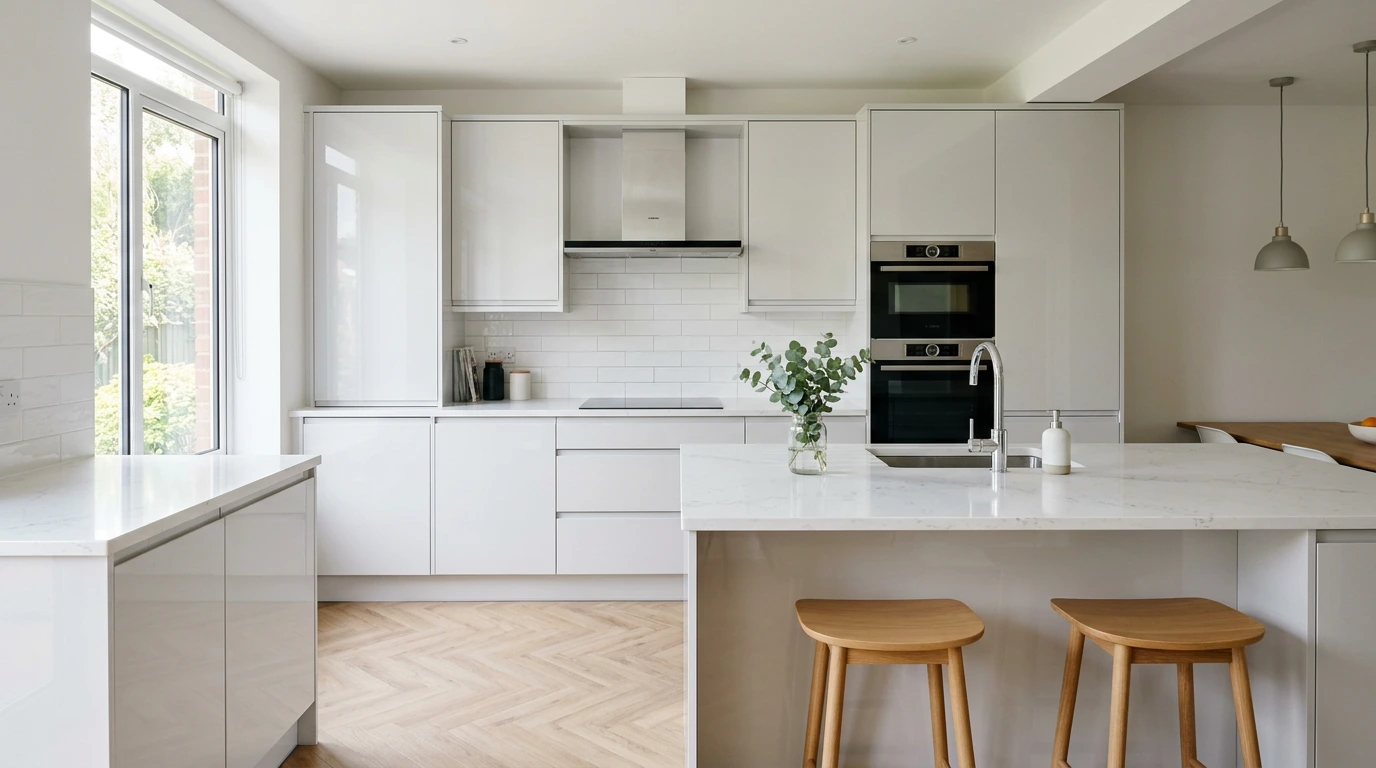
A gloss finish is smooth, reflective and full of life. It bounces light around a room, which makes it a favourite for smaller or darker kitchens that could use a lift, and it gives a space a clean, contemporary energy. High gloss kitchens feel bright, fresh and modern, and they pair beautifully with flat slab doors where nothing interrupts that mirror-like surface.
A high gloss look is most commonly achieved with a vinyl wrap, which is widely available and offers that bright, shiny finish at a friendly price. For an even smoother, deeper shine, acrylic is the material to look at, as we explain further down. Whichever route you take, the trade-off with any high shine surface is that it shows fingerprints and smears more readily, so it suits people who don't mind a quick wipe to keep it looking its best. If you're weighing this look against a softer one, our guide to gloss versus matt kitchen doors compares the two side by side.
Matt finishes
Matt is gloss' calm, understated cousin. Instead of reflecting light, a matt finish absorbs it, giving a soft, tactile, grounded feel that has become hugely popular. It reads as quietly sophisticated, works wonderfully in both modern and more traditional kitchens, and tends to hide fingerprints far better than gloss.
Many matt doors now come with anti-fingerprint surfaces, which makes day-to-day living even easier. They do ask for the right cleaning approach to stay looking their best, so if you're drawn to this finish, our guide on how to clean matt kitchen doors is worth a read before you decide.
Woodgrain: the look of timber, three ways
Here's something many people don't realise, and it's worth understanding before you choose. "Woodgrain" describes a look, the warm, natural appearance of timber, rather than a single material. That same woodgrain look can be created in three different ways, and they're not all real wood:
Woodgrain effect is the most common. The grain is printed onto a vinyl wrap and applied over a shaped board core, cleverly replicating the appearance of timber. It gives you the warmth and character of a wood look on a practical, budget-friendly door. This is what most woodgrain-coloured doors actually are, which is why it's worth knowing that a woodgrain colour doesn't necessarily mean real wood underneath.
Real wood veneer uses a thin layer of genuine timber bonded to a board core. Here the grain you see is real wood, with all its authentic character, but the door isn't solid timber all the way through. It sits nicely between the effect and the solid option, on both look and price.
Solid wood is the real thing throughout, covered under materials below. Genuine timber, its own natural grain, and a premium, heritage feel.
None of these is better than the others; they suit different budgets and priorities, and all three give you that lovely woodgrain look. The reason we're clear about "woodgrain effect" is a simple, honest one: it's easy to assume a woodgrain colour means real wood, when most often it's a beautifully done effect.
Texture is having a real moment in kitchen design, and woodgrain is at the heart of it. A common and sensible question is how well these finishes hold up to daily life, which we answer in full in our guide to whether woodgrain effect kitchen doors are durable.
Painted and smooth finishes
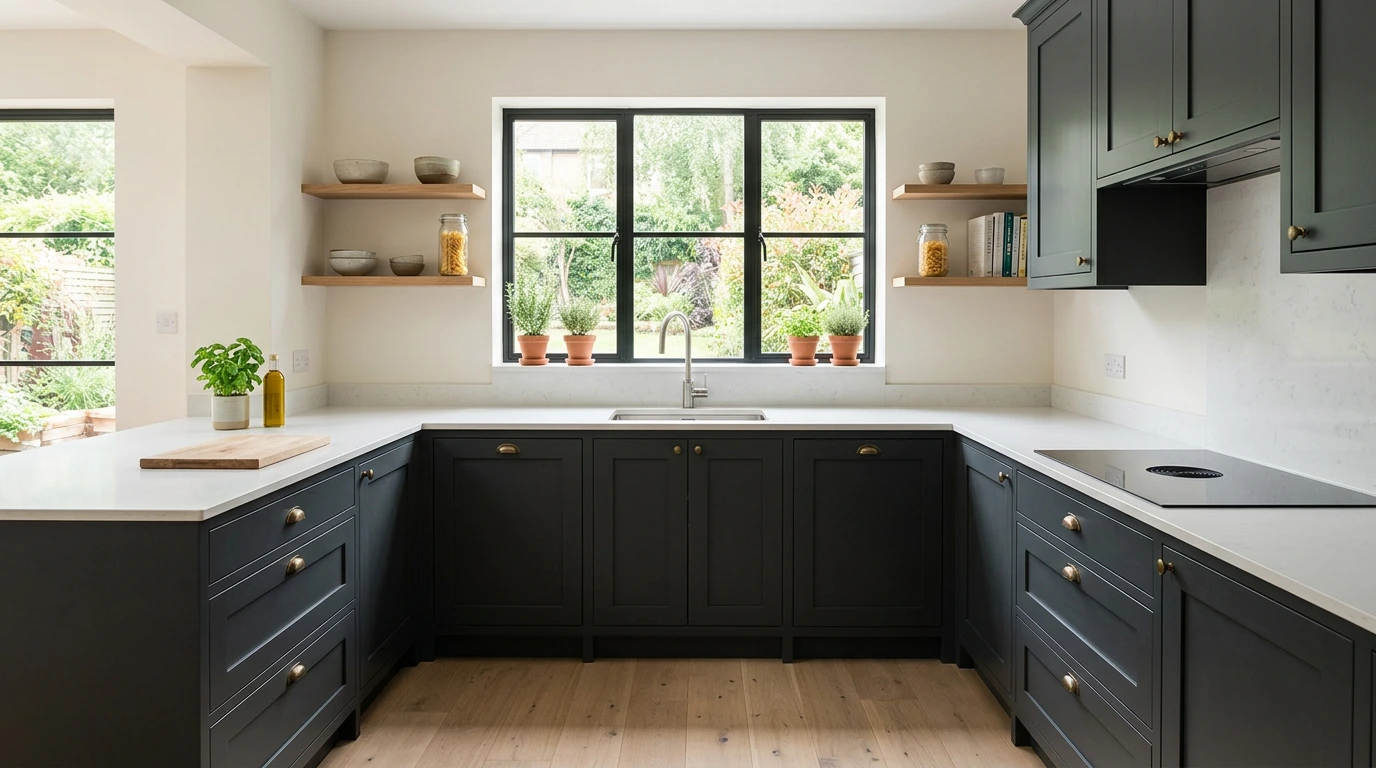
A smooth painted finish is the classic choice, especially for Shaker and in-frame doors where the crisp surface shows off the door's clean lines. Painted finishes feel timeless and elegant, take colour beautifully, and suit homes that lean traditional or transitional. They're the natural home for those soft sages, dusky blues and warm neutrals that never seem to date.
What's underneath: the main materials
Now for the part you don't see but very much feel over the years. Here are the materials most kitchen doors are built from.
Vinyl-wrapped MDF is one of the most popular and versatile options. A sheet of vinyl is wrapped over a shaped MDF core, which means it can take almost any colour, finish or profile, from matt Shaker to gloss slab, and it's the most common way to achieve a high gloss look. It offers a lot of look for a friendly price, which makes it a confident choice for many homes.
Acrylic is the material behind the most striking high-gloss doors. While vinyl is the most popular route to a gloss finish, acrylic is unique in its ability to create an almost perfectly smooth, deep, glass-like shine, sometimes called super gloss. It's hard to beat for a sleek, premium modern kitchen. If you love that mirror finish, it's worth understanding how acrylic compares with a wrapped door, which we cover in our guide to acrylic versus vinyl wrapped kitchen doors.
Painted or sprayed MDF gives that smooth, factory-finished painted look with a uniform, high-quality surface, and it's a popular foundation for Shaker and in-frame styles.
Real wood veneer is a thin layer of genuine timber bonded to a board core. It gives you an authentic woodgrain surface, real wood with real character, without the cost of a fully solid door, making it a lovely middle ground for those who want the real thing on the surface.
Solid wood and timber bring genuine, characterful warmth and a sense of craftsmanship. Unlike a woodgrain effect finish, which replicates the look of timber, solid wood is the real thing right through: each door carries its own natural grain, which many people love, and it's often the choice for those who want longevity and a more premium, heritage feel.
Laminate and foil-wrapped doors are other practical, hard-wearing options. Like vinyl, they use a tough surface bonded over a board core, giving an easy-clean result that copes well with the knocks of a busy family kitchen, usually at a budget-friendly price. It's handy to know what they are if you come across them while you're looking.
How finish and material work together
The magic is in the pairing. A matt look might come from a vinyl wrap or a sprayed finish; a glossy look might come from a vinyl wrap or, for the smoothest shine, acrylic. The same warm grey can feel budget-friendly and practical in one combination and quietly luxurious in another. None of these is better; they're different ways to reach the kitchen you're picturing, at the price that's right for you.
This is genuinely good news. It means your favourite look is almost always achievable, whatever your budget. A handsome matt Shaker can be created at the friendly end and the premium end alike, and both can be exactly right for the people who choose them.
Living with your finish: durability and care
Beauty matters, but so does how a door feels to live with over the years, and this is where finish and material quietly do their work. Different kitchen door finishes wear in different ways, and knowing this upfront saves any surprises later.
Gloss and high-shine acrylic surfaces are wipe-clean and resilient, though their reflectiveness means smudges show a little sooner, so they reward a quick once-over. Matt surfaces are forgiving with fingerprints and feel wonderfully soft underhand, but they prefer a gentle cleaning routine over harsh abrasives, which is exactly what our guide on how to clean matt kitchen doors is there to help with. Woodgrain effect and textured finishes are hard-wearing and rather good at disguising the odd scuff, and you can read more about how they cope with daily life in our piece on whether woodgrain effect kitchen doors are durable.
Underneath, the material plays its part too. Vinyl-wrapped and laminate doors shrug off the knocks of a busy family kitchen and clean up easily, while solid timber ages with genuine character, developing a warmth over the years, though it appreciates a little more care to stay at its best. It's worth matching the finish to your day to day, so the kitchen that looks right on day one still feels right years down the line.
How to choose the finish that's right for you
A few gentle questions tend to bring everything into focus. How much natural light does your kitchen get, and would you like to add brightness or keep things soft and calm? How busy is your kitchen day to day, and how much wiping down are you happy to do? Do you lean modern or traditional in the rest of your home? And what feels right when you imagine running your hand across the door?
You don't need to have it all worked out before you begin. Often, the moment you see a finish in the right light, you know. And if you'd like to revisit the door shapes these finishes sit on, our complete guide to kitchen door styles is a perfect companion to this one.
Ready to find your finish?
Choosing a finish should feel exciting, not overwhelming. Once you have a sense of the look and feel you're drawn to, the next step is finding a supplier who does it beautifully, at a price that feels right for you.
Not sure which direction is right for you? Answer a few quick questions and we'll point you to the right place.